Mining towns carry a distinct place in regional identity, shaped by extraction, migration, and the cycles of resource demand. From remote camps to bustling company towns, these communities reveal both the promise of rapid growth and the vulnerability that comes with dependence on a single industry.
Understanding the patterns that create boom-and-bust dynamics—and the strategies that lead to resilient futures—helps communities plan for long-term stability.
The lifecycle of a mining town
A typical mining town begins with a discovery that draws investment and workers. Rapid construction follows: housing, rail or road links, supply stores, and basic services. Some towns become company-dominated, with employers providing housing, schools, and utilities. When ore runs out or commodity prices decline, populations shrink and infrastructure can be abandoned. This cycle creates the iconic ghost towns seen across many regions but also leaves behind cultural heritage and industrial assets that can be repurposed.
Challenges that persist
– Economic concentration: Heavy reliance on mining makes local economies vulnerable to price swings and technological shifts like automation, which reduces labor demand even when production increases.
– Environmental legacy: Tailings, contaminated soil, and water pollution require costly remediation and long-term monitoring.
– Social impacts: Rapid influxes and sudden departures stress local services, housing markets, and social cohesion.
– Infrastructure deterioration: Abandoned facilities and roads increase maintenance burdens for municipalities.
Opportunities for revitalization
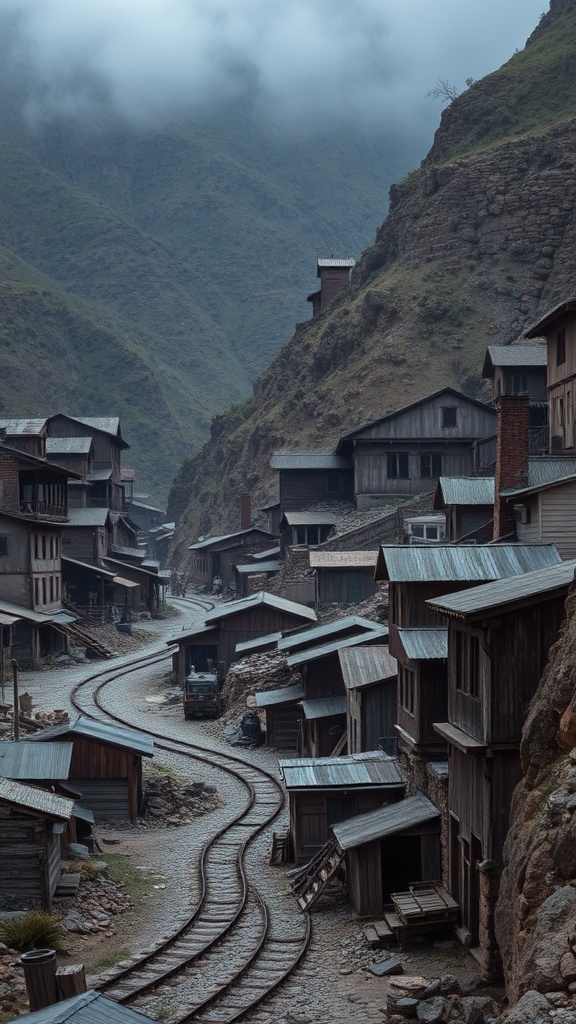
Many mining towns find pathways to stability by leveraging natural advantages and embracing diversification:
– Heritage tourism: Preserving historic buildings, interpretive trails, and mine tours can attract visitors interested in industrial heritage.
Well-managed tourism creates jobs and keeps local stories alive without heavy environmental cost.
– Adaptive reuse: Old warehouses, mills, and mines often transform into cultural centers, artist studios, breweries, or tech incubators. Repurposing existing structures reduces construction costs and preserves character.
– Environmental remediation and green jobs: Cleanup projects create employment and position communities as leaders in ecological restoration. Remediated sites can be converted into parks, solar farms, or wildlife habitats.
– Renewable energy and infrastructure reuse: Large flat areas and former industrial sites are well-suited for solar or wind projects.
Transmission lines and road networks built for mining can support new economic activities.
– Remote work and broadband: Investment in high-speed internet allows remote professionals to live in lower-cost mining towns, supporting local businesses and services.
– Workforce development: Retraining programs help former mine workers transition into construction, renewable energy, conservation, and tourism roles.
Best practices for policymakers and communities
– Engage stakeholders early: Involve residents, Indigenous groups, former workers, and businesses in planning to ensure equitable outcomes.
– Prioritize remediation funding: Secure grants and partnerships to address pollution and open redevelopment opportunities.
– Preserve cultural assets: Document oral histories and protect significant structures to anchor tourism and community identity.
– Create flexible zoning and incentives: Allow mixed uses and offer tax incentives or low-interest loans for adaptive reuse projects.
– Invest in connectivity and amenities: Broadband, healthcare, and education make mining towns attractive to new residents and businesses.
The story of mining towns is one of transformation.
While extraction shapes landscapes and livelihoods, strategic planning can convert legacy challenges into new sources of economic and social vitality. With thoughtful investment and community-led initiatives, former extraction hubs can become models of sustainable reuse and resilient local economies.