Revitalizing Mining Towns: How Communities Reinvent Themselves for a Sustainable Future
Mining towns have a distinct rhythm — deep-rooted identity, rugged landscapes, and economies tied to extraction.
As global demand, commodity cycles, and environmental priorities shift, these communities face tough choices. Many are seizing the moment to transform legacy challenges into diverse, resilient futures.
The shifting economy
Traditional mining employment often declines as resources deplete or operations automate. That transition can leave a skills gap and empty storefronts, but it also creates space for new industries. Diversification strategies that emphasize small business growth, advanced manufacturing, and local food systems help reduce dependence on a single employer. Workforce retraining programs linked to regional colleges or trade organizations make it easier for residents to move into growing sectors.
Environmental legacy and reclamation
Abandoned mines and tailings present long-term environmental and public-health concerns.
Reclamation — reshaping land, stabilizing waste, and restoring ecosystems — is essential for safe redevelopment. Securing funding through government programs, partnerships with mining companies, and environmental grants accelerates cleanup and unlocks land for new uses. Transparent community engagement during reclamation builds trust and ensures projects meet local needs.
Heritage tourism and adaptive reuse
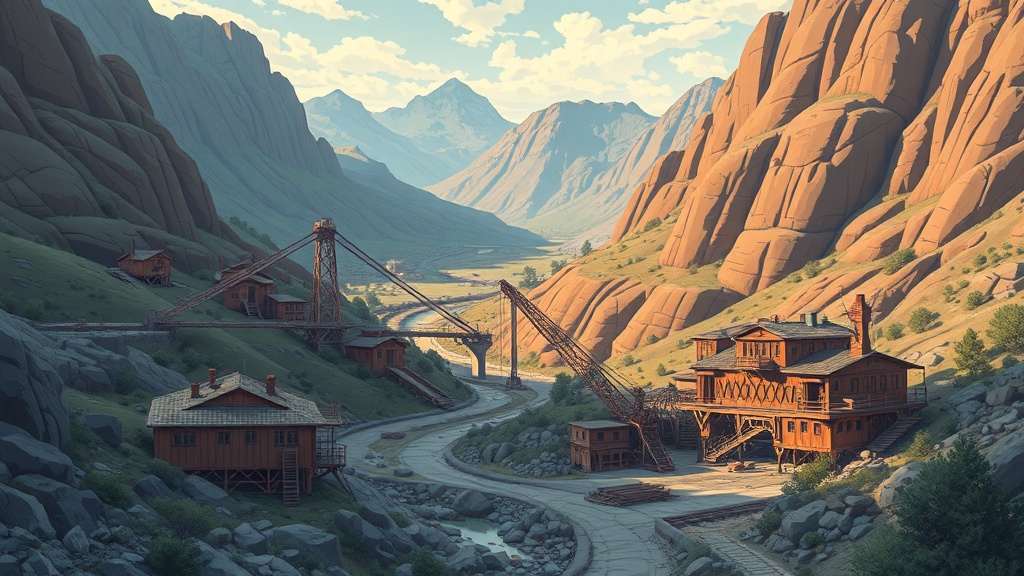
Mining towns often possess rich architectural and cultural assets: historic mine structures, rail lines, and distinctive neighborhoods. Heritage tourism taps that authenticity by preserving landmarks and creating interpretive trails, museums, and events that celebrate local history. Adaptive reuse of industrial buildings into marketplaces, studio spaces, or visitor centers retains character while attracting entrepreneurs, artists, and travelers.
New opportunities: renewables, remote work, and tech
Renewable energy projects — solar, wind, and battery storage — can repurpose former industrial sites and provide stable, long-term revenues and jobs.
Former mine lands often have the space and grid access attractive to developers. Broadband investment is equally transformative: reliable internet enables remote work, online education, telehealth, and e-commerce, helping younger residents stay and connecting local businesses to wider markets. Emerging technologies such as drone surveying and remote-sensing for mine monitoring create niche job pathways.
Community resilience and social renewal
Economic plans must align with social priorities: affordable housing, healthcare access, and cultural offerings. Grassroots leadership and inclusive planning ensure transitions benefit long-term residents, not only newcomers. Community land trusts, cooperative ownership models, and small-business incubators preserve local control and spread economic gains.
Practical steps for local leaders
– Conduct a shared visioning process that includes residents, former mine workers, and youth.
– Map assets and liabilities: identify reclaimable land, historic structures, and workforce skills.
– Prioritize broadband and transport improvements to attract remote workers and businesses.
– Leverage reclamation to create sites for renewable projects, parks, or industrial reuse.
– Partner with universities and nonprofits for retraining and entrepreneurship programs.
– Market the town’s story through festivals, trails, and digital storytelling to draw visitors and investors.
Mining towns possess a unique advantage: a deep sense of place.
With strategic planning, investment in people and infrastructure, and creative reuse of industrial legacies, these communities can evolve into diversified economies grounded in their history and poised for a sustainable future.