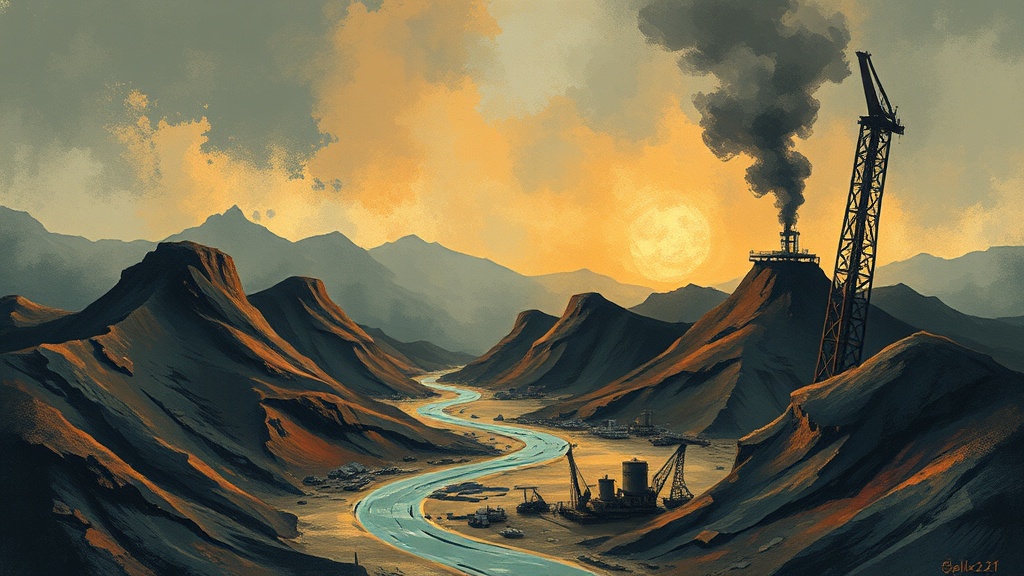
Mining towns occupy a unique place in cultural memory and economic planning.
Once centered on extraction, many of these communities now face the challenge — and opportunity — of redefining themselves. Successful transitions balance heritage preservation, environmental remediation, and economic diversification, creating resilient places where people want to live, work, and visit.
The legacy of mining is visible: headframes, slag heaps, and sometimes contaminated soils or waterways. Addressing environmental issues is the first step toward long-term viability. Modern reclamation techniques focus on stabilizing slopes, treating acid mine drainage, and restoring native vegetation. Strategic remediation not only protects health and ecosystems but also opens land for new uses — parks, solar farms, and mixed-use development are common outcomes when cleanup is paired with planning.
Heritage tourism is one of the most powerful tools for mining towns. Visitors are drawn to authentic experiences: guided mine tours, interpretive centers, and preserved worker housing.
Retaining industrial architecture provides a storytelling backbone that fuels museums, festivals, and culinary or craft scenes. Adaptive reuse of mine buildings into event venues, breweries, or maker spaces keeps character intact while creating economic activity.
With thoughtful interpretation and safety measures, former mines become assets rather than liabilities.
Economic diversification reduces vulnerability to commodity cycles.
Key strategies include:
– Outdoor recreation: Trails, climbing, fishing, and snow sports attract visitors and support hospitality jobs.
– Creative industries: Artists’ residencies, galleries, and studios often take root in affordable, historic buildings.
– Remote work hubs: Improved broadband and coworking spaces help attract telecommuters seeking lower-cost living and nature access.
– Renewable energy: Solar or wind projects can transform reclaimed land into revenue-generating infrastructure.
– Education and training: Vocational programs linked to remediation, renewable energy, and advanced manufacturing build local skills.
Funding these shifts typically involves a mix of public grants, private investment, and partnerships.
Governments often offer brownfield or reclamation programs that reduce cleanup costs, while philanthropy and impact investors provide capital for heritage and cultural projects. Public-private partnerships help align economic incentives with community goals.
Community engagement determines long-term success.
Residents should lead visioning exercises, ensuring projects reflect local identity and needs. Inclusive planning prevents displacement, preserves affordable housing, and integrates workforce development so that new jobs benefit existing populations. Social infrastructure — healthcare, education, transit — must be part of revitalization plans to sustain population retention and growth.
Safety and regulation remain essential. Tours and adaptive reuse projects require rigorous structural assessments and compliance with mine-safety and building codes. Environmental monitoring should continue after remediation to ensure long-term stability.
Transparency about risks and costs builds trust and attracts responsible investment.
Mining towns can transform from single-industry dependence into diverse, vibrant places. By combining environmental cleanup, heritage-driven tourism, economic diversification, and community-led planning, these places retain their distinct sense of place while offering modern amenities. For stakeholders — elected officials, developers, community leaders — the path forward is collaborative and multidisciplinary, leveraging history as an asset while investing in sustainable futures.