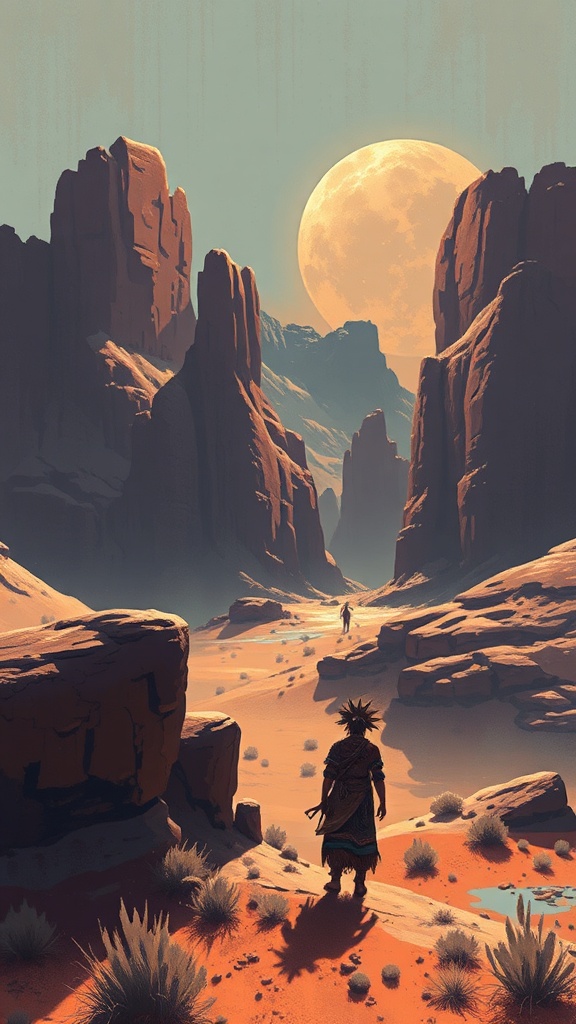
Appreciating the deep roots of this artistic practice invites us to traverse a unique journey that engages our senses and educates us about the rich culture from which it emerges.
The Navajo people, native to the Southwestern United States, have been creating art for centuries.
Their artistic expressions, in the form of weaving, pottery, jewelry, and sand painting, are not just creative endeavors, but also spiritual journeys. Each piece of Navajo art embodies the essence of the artist’s life, experiences, and worldview.
One of the most revered forms of Navajo art is weaving, which is primarily a women’s art form. Navajo weavers intricately craft wool into blankets, rugs, and tapestries, each one telling a distinct story. The patterns and colors used in these woven wonders are not random but are deeply symbolic, carrying the whispers of Navajo legends, myths, and spiritual beliefs. The rug designs often feature complex geometric patterns and vibrant natural dyes, representing elements of the natural world and the spiritual realm. The art of weaving is learned by observing and practicing, passed down from generation to generation. It is a living tradition that embodies the Navajo cultural values of patience, respect, and harmony with nature.
Another significant form of Navajo art is sand painting or dry painting. Navajo sand paintings are created for healing rituals, where the intricate, colorful designs serve as a gateway for spiritual beings. Using crushed rocks, gems, and minerals, the sand painter creates a sacred work of art on the ground, guided by chants, prayers, and the rhythm of the ceremony. Once the ceremony concludes, the sand painting is destroyed, symbolizing the impermanence of life.
Navajo pottery, both practical and decorative, is another expressive medium.
Hand-coiled and painted with intricate designs, these pottery pieces mirror the landscape’s hues–terra cotta, black, white, and golden. The designs often depict elements of Navajo mythology, such as the Yei – supernatural beings who intervene between humans and the gods.
Navajo jewelry, specifically silver and turquoise work, is renowned worldwide and reflects the Navajo’s deep connection with the earth. Turquoise is considered a sacred stone, representing life, health, and prosperity. Each piece of jewelry, whether a ring, bracelet, or necklace, narrates a part of Navajo heritage and spirituality.
Today, Navajo art continues to thrive, reflecting both the traditional and contemporary experiences of the Navajo people. It’s a dynamic form of cultural expression that continues to evolve while staying true to its roots. Many Navajo artists are blending traditional techniques with contemporary styles, creating pieces that are uniquely Navajo yet resonate with a global audience.
Understanding and appreciating Navajo art offers a window into a rich cultural tapestry, where each strand carries a story, a belief, an essence. It’s a testament to the resilience, the creativity, and the spiritual depth of the Navajo people. As we engage with Navajo art, let us do so with respect, understanding, and an open heart, recognizing the immense value and beauty it holds.