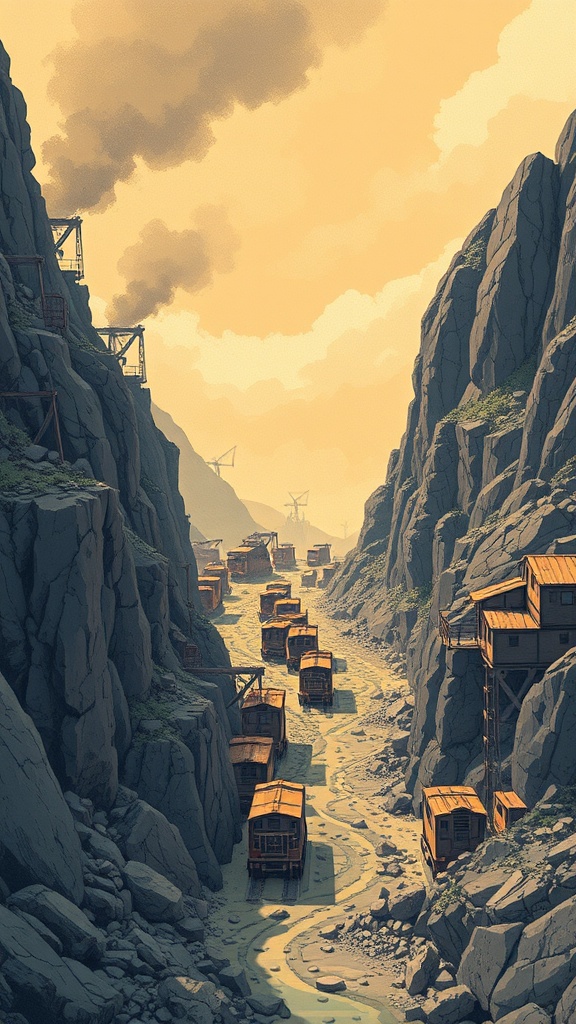
Mining towns are living stories of resource booms, human ingenuity, and reshaped landscapes.
Whether still active, reimagined as cultural hubs, or preserved as ghost towns, these communities offer lessons about adaptation, sustainability, and local identity that resonate beyond the mining sector.
From extraction to reinvention
Mining towns often begin with rapid growth tied directly to a single commodity. When mines slow or close, communities face economic and social disruptions. Successful transitions usually involve a mix of short-term support (job retraining, unemployment assistance) and long-term strategies: economic diversification, infrastructure investment, and branding that leverages unique local assets.
Heritage tourism and cultural preservation
Many former mining towns have found new life through heritage tourism. Preserving historic mine structures, offering guided mine tours, and developing museums or interpretive trails attract visitors interested in industrial history, architecture, and the human stories behind mining. Events like festivals, photography weekends, and cultural exhibitions can extend the tourism season and create jobs in hospitality, guiding, and retail.
Environmental remediation and mine reclamation
Responsible mine closure and reclamation are essential for public health and future land use. Reclamation strategies include landscape reshaping, soil remediation, water treatment wetlands, and vegetation with native species to stabilize soils and restore ecosystems. Reclaimed mine sites can become parks, wildlife habitat, renewable energy projects, or agricultural land, depending on site conditions and community goals.
Adaptive reuse and creative economy
Transforming old mine buildings into galleries, co-working spaces, or craft workshops supports a creative economy and attracts remote workers. Affordable housing conversions and incentives for small businesses help retain residents and encourage new enterprises.
Partnerships with artists, makers, and entrepreneurs create cultural vibrancy while preserving industrial character.
Renewable energy and new industries
Mine sites often have favorable zoning and infrastructure for renewable energy projects such as solar farms or battery storage.
Turning former industrial footprints into clean-energy hubs can provide local jobs and revenue through land leases or community-owned energy cooperatives.
Other growth areas include circular-economy businesses, value-added processing for local minerals, and technology-driven services.
Community resilience and social capital
Strong civic institutions, clear leadership, and resident engagement are crucial during transitions. Communities that foster local decision-making, support small-business incubators, and invest in education and broadband access are better positioned to adapt. Programs that focus on mental health and social cohesion reduce the stress of economic change and help communities envision a shared future.
Policy tools and funding
Effective policy and access to funding accelerate transformation.
Mechanisms such as mine-closure bonds, targeted grants for economic diversification, and public-private partnerships provide resources for remediation, infrastructure upgrades, and workforce development. Municipalities that proactively engage with regulators and industry can shape closure plans that align with long-term community goals.
Balancing memory and future use
Preserving mining heritage while pursuing new uses requires thoughtful planning. Historic structures convey identity and attract visitors, but safety and environmental concerns must be managed. Adaptive reuse that respects historic character while meeting contemporary standards creates places that honor the past and serve current needs.
Mining towns are more than relics of extraction; they are laboratories for resilience. With strategic planning, community leadership, and creative use of local assets, these towns can reinvent themselves as centers of culture, clean energy, and diversified economies—demonstrating how places shaped by industry can evolve toward sustainable futures.