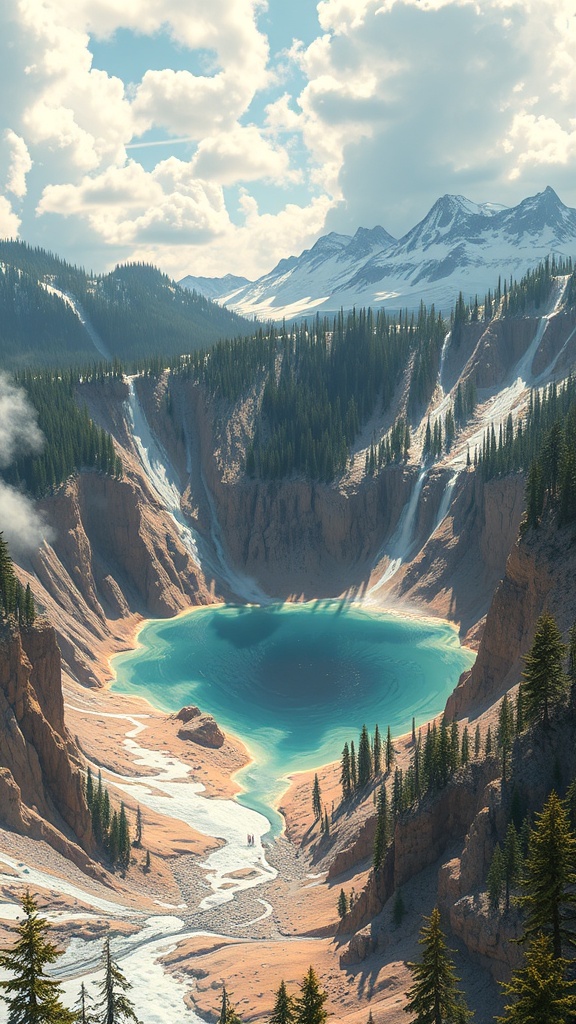
Yellowstone is a place where steam, stone, and wildlife converge to create one of the planet’s most vivid natural theaters. Whether you’re drawn by geysers, painted hot springs, or the chance to spot bison against a mountain backdrop, getting the most out of a visit means balancing wonder with caution and stewardship.
Geothermal highlights
– Old Faithful receives the most attention for good reason: its predictable eruptions offer a reliable display of geothermal power.
Nearby basins—Grand Prismatic Spring in Midway Geyser Basin and the colorful hot springs of Norris and Lower Geyser Basin—showcase striking bacterial mats and mineral-rich water that produce intense blues, oranges, and greens.
Boardwalks and designated trails allow close viewing without damaging delicate thermal features; stepping off them can destroy microbial mats and expose visitors to lethal temperatures.
Wildlife etiquette and safety
Yellowstone supports iconic species—bison, elk, wolves, grizzly and black bears, and myriad birds. Safe, respectful wildlife viewing is essential:
– Keep at least 100 yards from bears and wolves, and at least 25 yards from other large animals like bison and elk.
– Never approach or feed wildlife; habituation risks both human and animal safety.
– Use telephoto lenses for close-up shots; if a crowd forms for a sighting, maintain space and avoid blocking roads.
– Carry bear spray in backcountry areas and know how to use it; store food and scented items properly if camping.
Planning and timing
Traffic congestion and crowded popular viewpoints are common.
To improve your experience:
– Start early or visit late in the day for quieter boardwalks and softer light.
– Explore lesser-known trails and overlooks to escape the busiest spots.
– Check park alerts for road closures and wildlife activity before exploring; conditions can change quickly.
– Be flexible—weather, geothermal activity, and animal movements shape what you’ll see.
Conservation challenges
Keeping Yellowstone healthy requires ongoing attention.
Fire plays a natural role in shaping park ecosystems, and prescribed fires and wildfire response are essential management tools. Aquatic ecosystems face pressure from invasive species; efforts to protect native fish focus on preventing new introductions and controlling existing threats. Climate variability is influencing snowpack, hydrology, and species behaviors, prompting adaptive management strategies that aim to preserve ecological integrity while accommodating visitor use.
Backcountry basics
Backcountry travel presents unique rewards and responsibilities:
– Obtain necessary permits for overnight trips and follow Leave No Trace principles.
– Be prepared for rapid weather changes and rugged terrain; carry maps, a reliable navigation method, and emergency supplies.
– Respect closures and restoration areas—these help regenerating habitat and protect sensitive features.
Photography and experience tips
– Golden hours (shortly after sunrise and before sunset) yield the best light for both landscapes and wildlife.
– Bring layers—temperature swings can be dramatic between lowlands and high-elevation trails.
– Consider ranger-led programs for deeper insight into geology, ecology, and cultural history.
Yellowstone invites curiosity and humility. Observing its geothermal wonders and wildlife responsibly, following park regulations, and leaving no trace help ensure that this unique landscape remains vibrant and accessible for all who come to witness it.