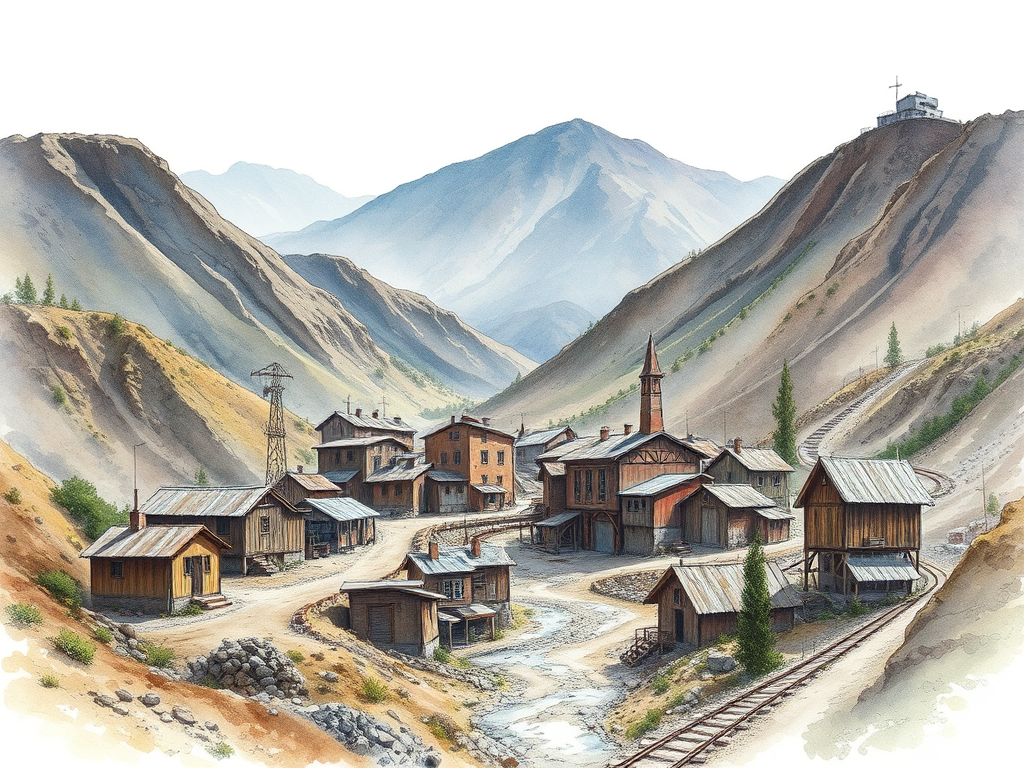
Mining towns, often nestled between breathtaking landscapes and rugged mountains, form the backbone of the mining industry.
Today, the significance of these towns extends beyond their historical role.
They serve as an epitome of resilience, evolution, and adaptability, while also providing critical insights into the socio-economic and environmental impacts of mining operations.
We often perceive these towns as remote settlements that came into existence during boom periods of mineral extraction.
However, their contemporary relevance can’t be understated.
In the modern world, they continue to be a major source of various minerals, contributing significantly to the global economy.
As global demand for minerals expands, mining operations are venturing into even more challenging territories, perpetuating the importance of mining towns. They are the hubs that facilitate the mining processes, housing the workforce required to excavate, process, and transport minerals.
The economic impact of mining towns ripples outward, affecting surrounding areas through job creation and infrastructure development. These towns often spur the growth of ancillary industries like logistics and construction, invigorating the local economy and catalyzing overall regional development. As a result, they play an integral role in poverty alleviation and employment generation.
Yet, the prosperity of mining towns is not without challenges. The boom and bust cycle inherent in the mining industry can lead to economic instability.
When mineral resources deplete or commodity prices plummet, mining towns can face stagnation or decline. The key to sustainable growth in these areas lies in diversification and creating opportunities outside the mining sector.
Consequently, many mining towns are currently making strategic efforts to evolve into sustainable communities. They are focusing on developing other sectors such as tourism, agriculture, and renewable energy.
Eco-tourism, in particular, is gaining momentum. These initiatives not only boost the local economy but also work towards preserving the natural and cultural heritage of these locales.
Environmental sustainability is another crucial issue for mining towns today. Mining operations often result in significant environmental degradation, posing challenges such as deforestation, water pollution, and biodiversity loss. In response to these concerns, many mining companies and communities are embracing responsible mining practices. They’re investing in restoration activities, implementing stringent environmental controls, and adopting technologies that mitigate environmental impact.
In the social realm, mining towns are places of cultural fusion, where people from diverse backgrounds come together.
They are melting pots of various ethnicities, languages, and traditions.
While this can lead to enriched cultural experiences, it can also lead to social friction if not managed properly. Thus, fostering social cohesion and inclusivity has become a critical aspect of managing mining towns efficiently.
Mining towns, both old and new, remain vital players in the world’s economic, social, and environmental fabric. They serve as prime examples of how communities can adapt and evolve in the face of changing landscapes.
The complex dynamics of these towns, shaped by the boom and bust cycle of the mining industry, their social diversity, the need for environmental sustainability, and the drive for economic diversification, encapsulates the many challenges and opportunities they face. Mining towns’ ability to navigate these dynamics will significantly influence their sustainability and resilience in the global landscape of the future.